|
Kanser serviks hampir selalu boleh dicegah, dan menjalani ujian Pap smear secara berkala merupakan salah satu langkah penting dalam pencegahannya.
Saringan Kanser Serviks
Ujian saringan digunakan untuk mengesan pelbagai jenis kanser pada seseorang yang tidak mempunyai sebarang gejala.
Kajian menunjukkan bahawa saringan kanser serviks dapat membantu mengurangkan jumlah kematian akibat penyakit ini.
Ujian Pap smear merupakan ujian yang lazim digunakan untuk saringan kanser serviks. Selepas keputusan Pap smear tertentu menunjukkan perubahan yang tidak normal, ujian DNA HPV mungkin dilakukan.
Ujian DNA HPV boleh dilakukan bersama atau tanpa ujian Pap smear bagi tujuan saringan kanser serviks.
Fakta Mengenai Pap Smear
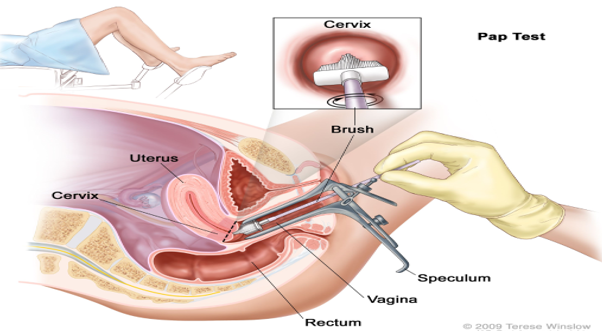
Pap smear bukanlah ujian untuk mendiagnosis kanser serviks. Ia merupakan ujian untuk memeriksa keadaan serviks, iaitu bahagian bawah rahim yang sering dikenali sebagai pangkal rahim.
Bagi kebanyakan wanita, keputusan ujian menunjukkan bahawa semuanya normal. Namun, bagi kira-kira 1 daripada 20 wanita, ujian mungkin menunjukkan perubahan pada sel yang boleh disebabkan oleh pelbagai faktor. Kebanyakan perubahan ini tidak akan berkembang menjadi kanser serviks.
Ujian Pap smear merupakan prosedur untuk mengambil sampel sel daripada permukaan serviks dan faraj. Kapas, berus atau alat kecil seperti batang kayu digunakan untuk mengikis sel secara lembut daripada serviks dan faraj. Sel tersebut kemudiannya diperiksa di bawah mikroskop bagi mengenal pasti sebarang perubahan yang tidak normal.
Kaedah baharu pengambilan dan pemeriksaan sel juga telah diperkenalkan, iaitu sel dimasukkan ke dalam cecair sebelum diletakkan pada slaid untuk pemeriksaan (sitologi berasaskan cecair / liquid-based cytology).
Pengesanan dan rawatan awal terhadap sel yang tidak normal boleh mencegah kira-kira 75% daripada kanser daripada berkembang. Walau bagaimanapun, seperti ujian saringan yang lain, Pap smear tidak sempurna. Ia mungkin tidak sentiasa dapat mengesan perubahan sel pada peringkat awal yang berpotensi menyebabkan kanser.
Sel yang tidak normal mungkin tidak dapat dikenal pasti kerana kadangkala ia kelihatan hampir sama dengan sel normal, atau jumlah sel tidak normal yang berjaya dikumpulkan adalah terlalu sedikit.
Kira-kira 1 daripada 20 ujian mungkin perlu diambil semula kerana:
- Terdapat jangkitan di sekitar serviks yang perlu dirawat terlebih dahulu sebelum sampel yang jelas dapat diperoleh.
- Sel serviks pada slaid mungkin terlindung oleh darah atau lendir/cecair rembesan.
- Sel serviks yang dikumpulkan tidak mencukupi untuk memberikan penilaian yang tepat.
- Sampel mungkin tidak disediakan dengan sempurna.
- Slaid mungkin mengalami kerosakan.
Fakta Mengenai Ujian DNA HPV
DNA HPV ialah ujian makmal yang menggunakan sel yang diambil daripada serviks untuk mengesan DNA Human Papillomavirus (HPV).
Doktor mungkin mencadangkan ujian DNA HPV:
- Jika keputusan Pap smear menunjukkan jenis perubahan tertentu yang tidak normal.
- Bersama-sama Pap smear untuk saringan kanser serviks bagi wanita berumur 30 tahun dan ke atas.
- Sebagai alternatif kepada Pap smear untuk saringan kanser serviks bagi wanita berumur 30 tahun. (Nota: Sesetengah pakar mencadangkan kaedah ini bagi wanita berumur 25 tahun dan ke atas.)
Human Papillomavirus (HPV) ialah sekumpulan virus yang berkaitan antara satu sama lain. Jangkitan HPV di kawasan kemaluan adalah perkara yang biasa berlaku dan boleh merebak melalui hubungan seksual. HPV juga boleh menyebabkan ketuat pada bahagian tubuh yang berlainan.
Terdapat lebih daripada 200 jenis HPV, dan kira-kira 40 daripadanya boleh merebak melalui hubungan seksual secara langsung dengan individu yang dijangkiti. HPV juga boleh merebak melalui sentuhan kulit ke kulit yang intim. Sesetengah jenis HPV boleh menyebabkan kanser.
Terdapat dua kategori HPV yang disebarkan melalui hubungan seksual:
HPV berisiko rendah boleh menyebabkan ketuat pada atau di sekitar kemaluan, dubur, mulut atau tekak.
HPV berisiko tinggi boleh menyebabkan pelbagai jenis kanser seperti kanser serviks, kanser dubur, sesetengah kanser mulut dan tekak, kanser vulva, kanser faraj dan kanser zakar.
Kebanyakan jangkitan HPV akan hilang dengan sendiri dan tidak menyebabkan kanser. Namun, ada kalanya jangkitan HPV berterusan untuk tempoh yang lama. Jika jangkitan HPV berisiko tinggi berterusan selama bertahun-tahun, ia boleh menyebabkan perubahan pada sel. Jika perubahan ini tidak dirawat, ia boleh menjadi semakin serius dan akhirnya berkembang menjadi kanser.
Dalam ujian DNA HPV, sel diambil secara lembut daripada kawasan serviks dan dihantar ke makmal untuk pemeriksaan. Pemeriksaan dilakukan bagi menentukan sama ada sel tersebut mengandungi bahan genetik yang dikenali sebagai DNA daripada jenis HPV yang boleh menyebabkan kanser.
Antara jenis HPV berisiko tinggi yang lazim dikaitkan dengan kanser ialah HPV-16 dan HPV-18.
HPV berisiko tinggi boleh menyebabkan kanser serviks atau kanser dubur. Ujian DNA HPV dilakukan untuk menentukan sama ada seseorang dijangkiti salah satu daripada jenis HPV berisiko tinggi ini. Sesetengah jenis HPV berisiko rendah juga boleh dikenal pasti melalui ujian tersebut.
Ujian DNA HPV boleh dilakukan bersama atau tanpa Pap smear untuk saringan kanser serviks.
Saringan wanita berumur 30 tahun dan ke atas menggunakan kedua-dua ujian Pap smear dan DNA HPV setiap 5 tahun dapat mengesan lebih banyak perubahan pada serviks yang berpotensi berkembang menjadi kanser berbanding saringan menggunakan Pap smear sahaja.
Kepentingan Saringan Kanser Serviks
Kanser serviks selalunya boleh dicegah. Perubahan yang menunjukkan kemungkinan kanser sedang berkembang boleh dikesan pada peringkat awal supaya ia dapat dirawat sebelum berkembang menjadi kanser.
Walau bagaimanapun, ramai wanita yang menghidap kanser serviks tidak menjalani saringan secara berkala. Tidak menjalani saringan serviks secara berkala merupakan salah satu faktor risiko utama untuk mendapat kanser serviks.
Di Malaysia, wanita berumur 20 hingga 65 tahun yang aktif secara seksual disarankan menjalani ujian Pap smear pada awalnya secara tahunan selama 2 tahun. Sekiranya kedua-dua keputusan adalah normal, ujian Pap smear boleh dilakukan setiap 3 tahun.
Bagi wanita berumur 30 tahun dan ke atas, mereka disarankan menjalani ujian gabungan (combined test) yang merangkumi Pap smear dan ujian DNA HPV.
Bagaimanakah Risiko Kanser Serviks Boleh Dikurangkan?
- Menjalani saringan Pap smear / DNA HPV secara berkala.
- Berhenti merokok kerana merokok dikaitkan dengan jangkitan HPV yang berterusan.
- Mendapatkan vaksin HPV.
|







.png)